
Common Components of Septic Systems
Most septic systems, whatever the absorption area, start with the same parts: a septic tank, often a treatment unit, and a dose tank when the effluent is pumped. This page describes them. Add them to the map with the Tank Tools.
Septic tanks
The septic tank holds back the solids and passes the liquid on. It is usually a concrete tank in the ground, with or without separate compartments. Solids settle to the bottom as sludge, grease and light solids float to the top as scum, and the clearer liquid between them flows on.
The tank is a key part of the design. Designers often choose it by the local manufacturer: the capacities on offer, and the wait for each, depend on who makes it. landplan.io lists the tanks sold near the site, with their prices, when you add a tank. See Add a tank.
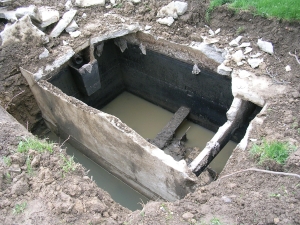
Tank materials
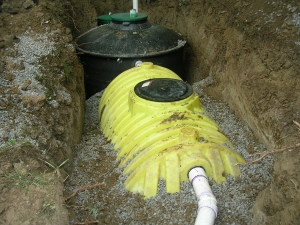
Some septic tanks are made of polyethylene or fiberglass instead of concrete. They are light: a small excavator, or even a few people, can carry them. They often cost more than concrete.
What leaves the septic tank
The liquid that leaves the tank is septic tank effluent. Septic means without oxygen. The effluent is mostly bacteria and fine particles of sewage, about 1/16 to 3/16 in across. It is highly contaminated and dangerous to touch. Its strength is measured as biochemical oxygen demand (BOD).
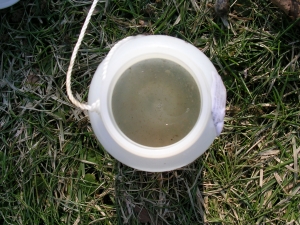
The effluent must be treated further, by the soil, by a treatment unit, or both.
Pumping the septic tank
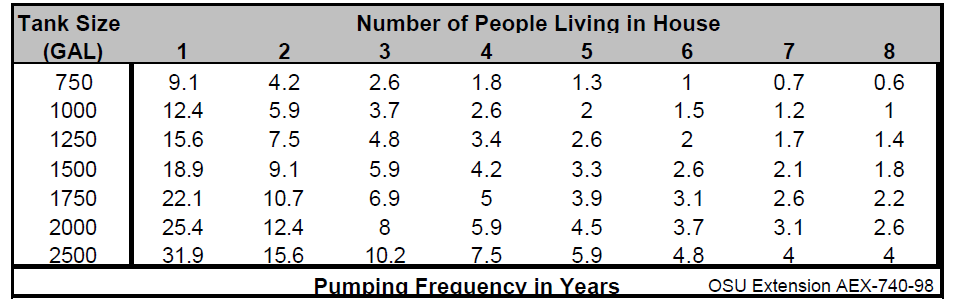
The solids stay in the tank until it is pumped. How often depends on the number of people in the home and the capacity of the tank.
Secondary treatment
A treatment train is the row of tanks and units the wastewater flows through. Secondary treatment uses aeration, filtration or both to remove more pollutants after the septic tank. Many advanced treatment units are one tank with several chambers inside. The effluent they produce is much cleaner than septic tank effluent, and many areas then allow a smaller or shallower absorption area.
There are two main methods, and many products and approved methods for each:
Makers usually recommend a service every 6 months: checking that any aerator works and is free of blockages, and cleaning any filter.
Add a treatment unit with the Tank tool as an Advanced Treatment Unit, or build the whole row of tanks with the Treatment train tool.
How much of the yard the tanks take
Owners often ask how much of their outdoor space the system will take. The tanks are buried. Their lids must reach at least 2 in above the ground so they can be opened. A septic tank and a treatment tank together typically take about 8 ft by 20 ft, downslope of the house. The sewer main leaves the house below grade and falls at about 1 % towards the tanks.
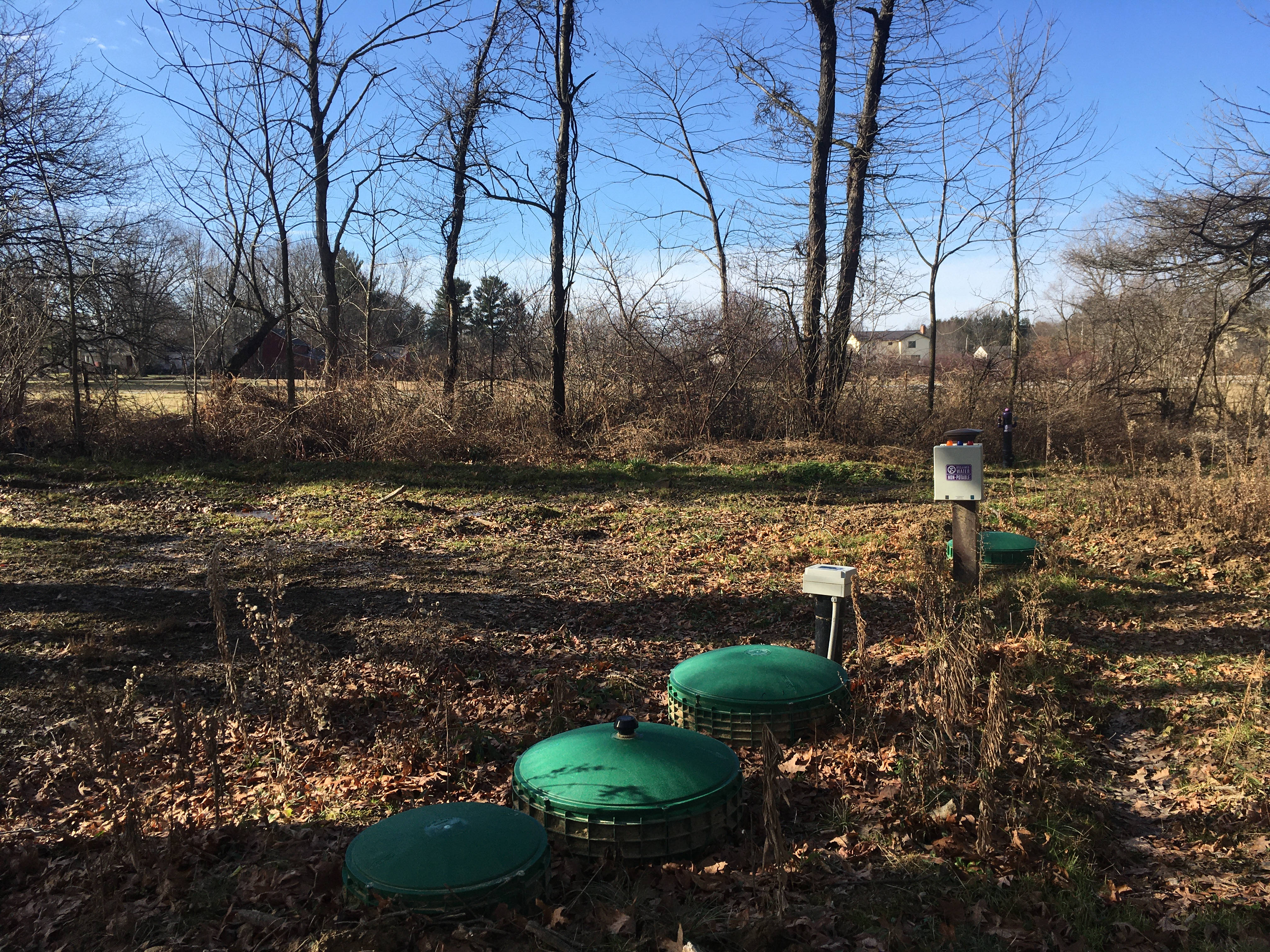
Treatment tanks usually have about 3 lids, and the dose tank one or two. The control panel can stand by the tanks, as here, or be mounted on the house at more cost.
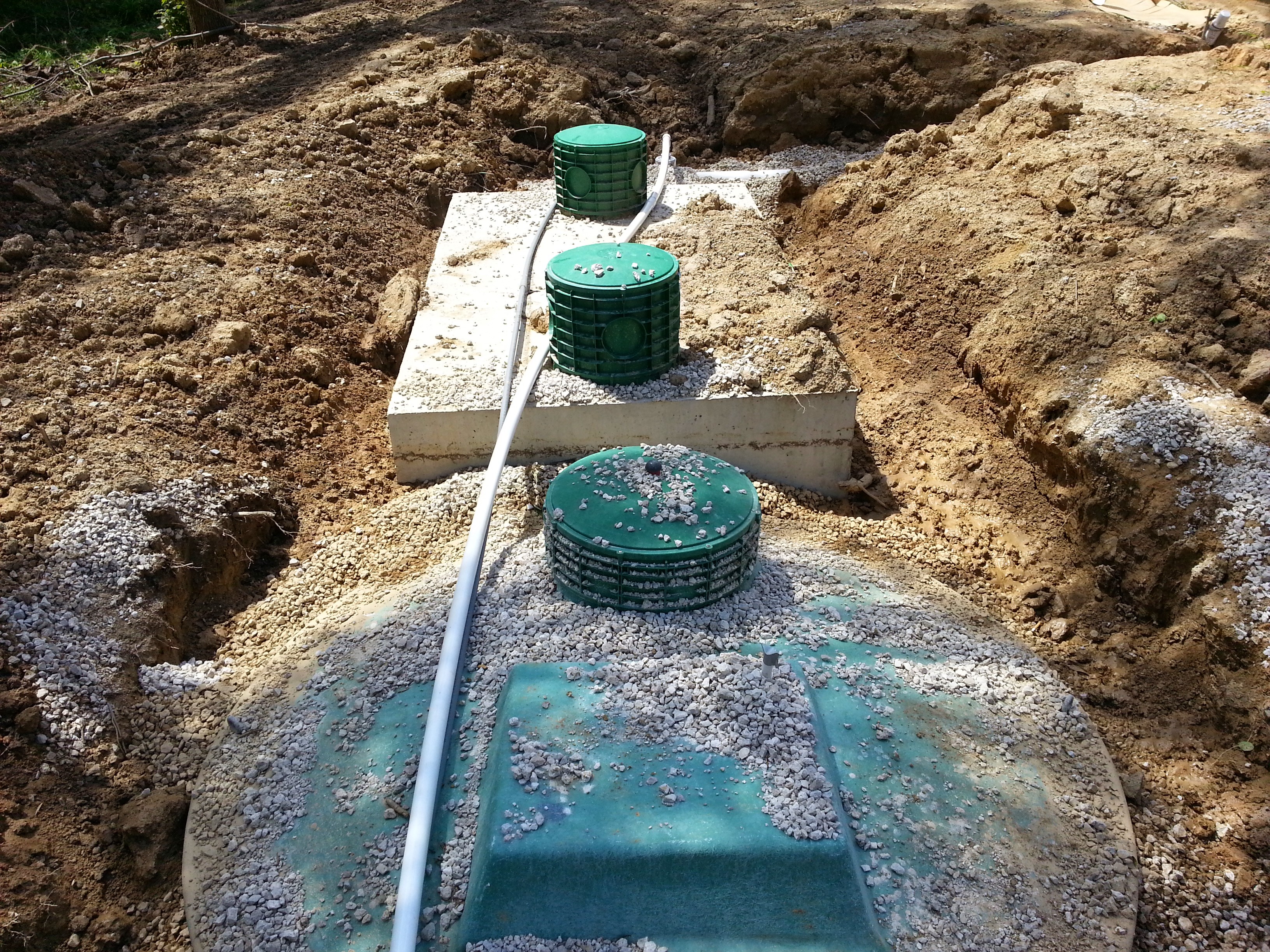
Treatment units need power for their aerators and control panels.
The dose tank
When the absorption area is higher than the tanks, or must be dosed under pressure, a dose tank (pump tank) holds the effluent and a pump sends it out in doses. Floats or a timer control the pump. See Dose Tank and Floats.