
Passive Non-Proprietary Onsite Wastewater Treatment Options
I'm going to say some something controversial. Onsite wastewater treatment does not have to be delivered to a residential site from a plastics manufacturing plant. Onsite installation contractors need additional options other than cookie cutter, black box, treatment units. They need more tried and tested designs of non-proprietary treatment options that can be easily generated per site.
Some treatment options for decentralized onsite systems that use non-proprietary technology with pros and cons [1]:
| Treatment Name | Description | Pros | Cons |
|---|---|---|---|
| Intermittent Sand Filters (ISF) | a constructed and lined filter using varying sized aggregate in combination | 1. capable of producing a high quality effluent 2. reduces total nitrogen levels by 25-30% on average 3. provides pathogen level reduction (avg. 200 colonies per 100 mL or less) 4. low maintenance, energy, and service requirements | 1. greater space requirement 2. greater level of design requirements (regulatory hesitancy) 3. local aggregate may be unavailable 4. susceptible to lesser performance during cold weather 5. susceptible to clogging from fats/oils/grease |
| Recirculating Sand/Gravel Filters | similar to intermittent sand filters with the exception being the wastewater has multiple-passes through the system | 1. capable of high quality effluent 2. reduces nitrogen by 50-60% 3. effluent is odorless 4. low maintenance and energy requirements 5. provides pathogen level reduction (2-3 log reduction for fecal coliform) | 1. greater space requirement 2. greater level of design requirements (regulatory hesitancy) 3. local aggregate may be unavailable 4. susceptible to lesser performance during cold weather 5. susceptible to clogging from fats/oils/grease 6. Requires control panel with timers to control recirculation rates |
| Subsurface Flow Wetlands | a constructed wetland, expertly selected plant-life installed in an aggregate media within a containment structure | 1. capable of producing relatively low BOD, TSS 2. considerable performance data is available for a variety of climates 3. good option for low flow situations such as cottages, vacation homes, low residency situations) 4. long service lives if properly designed and constructed 5. no power consumption 6. wetland plant respiration positively contributes to local ecology | 1. greater space requirement 2. limited nitrification capabilities contribute to effluent odors 3. high level of design detail needed 4. local aggregate may be unavailable 5. cannot use area over top wetland 5. reduced performance in cold weather periods 6. susceptible to clogging from fats/oils/grease |
All the above options are valid and studied methods for effectively treating wastewater. They can be constructed by onsite installation contractors using local materials. In fact, most proprietary systems utilize the same concepts, albeit with manufactured materials that the company sells of course.
One of the most important pros from a business standpoint is that of these systems all are non-proprietary. This means as long as you can prove to regulators that your design/installation of one of these components will safely and effectively treat the wastewater on the specific site you are working with, the complete labor cost (the primary cost of these systems), goes to you. This puts more of the total cost of a treatment system installation into the pockets of local onsite installation contractors.
I fully understand, that contractors can be quick to just want to get to the next job, but what happens when if they slow down and consider building one of these non-proprietary treatment methods? If most of the costs are in labor, it can ensure workers are always busy and improve employee satisfaction by creating complexity.
Skills Development
A trade or skill is the completion of a complex task and is something that must be developed over time. Not everyone can jump right into installing the treatment systems above. They require many skills that are transferable: constructing wooden frames, working with liners equivalent to laying carpet and ensuring proper flow through leveling of aggregate. The level of complexity of design/construction is definitely above that of installing a typical out-of-the-box treatment tank, but studies have shown that there is a direct correlation to employees complexity of their job and equivalent training with satisfaction.
Global onsite wastewater treatment technology has recently shown a trend of appealing towards simplicity. Gravelless chambers and other plastic products provide an easy means to installation. The same goes for very compact treatment systems, typically in some means of continuous aerobic treatment with a UV Light for reduction of harmful bacteria and viruses.
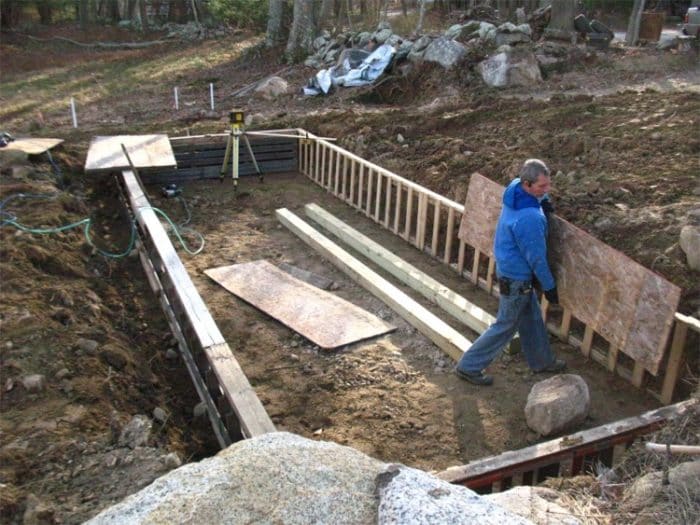
These systems all require excavation, proprietary and non. If contractors want to diversify their skills in the onsite wastewater treatment industry, it may be a good time to step outside the comfort zone and construct one of these options.
Incorporating the Waste Stream into Wastewater Treatment
An interesting facet to these systems is there can be a strong sustainability component. Trash is burden of society. Our amazing sanitation workers toil diligently to remove it from our eyesight. What if we could utilize more waste materials into the construction of wastewater treatment systems? A reliable recycled tire stream could become a benefit for a local installation company. A connection to a local waste management company could be made to allow stockpiling of recycled waste materials for use in local decentralized treatment.
Some common waste materials that are used in onsite wastewater treatment systems are:
- Tire Chips
- Crushed Glass (CG)
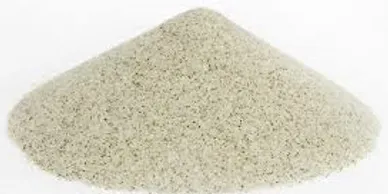
Recent study found that CG media achieved more total nitrogen (TN) reduction and has a price of only half of 2A sand/Concrete sand where a local source of CG is available [2].
Energy requirements can usually be considered passive compared to other proprietary treatment options.
It is true that some of these treatment options may not fully be passive requiring a pumping system as in the case of pumped discharge ISFs. Although, the average electricity use by this system was 9.4 kWh/month, and the cost of operating two pumps in these system has been less than 70 cents per month [4].
All About Design
Good Design is crucial to success in these types of systems. Since there may not be a cookie-cutter design available for all areas or even addressed in regulations, regulatory agencies may be wary of the approval of designs, making an uphill battle. It often leads contractors to opt for the least path of resistance and with proprietary technology.
Some regulatory agencies have provided great guideline materials for designing ISFs such as Washington State.
Key components to the design are:
- Total filter area
- Depth of filter media
- Specification of the media
- Dosing the media
Typically, a higher loading rate of 1.0 - 1.2 gal/day/sq. ft. is used than that of soil. Studies have shown that higher doses, to rates as high as 4 gpd/sq. ft. caused no drop in effluent quality and no signs of clogging. Using the minimum sq. ft. requirement loading rate may be the best option in addition to sticking to a rule of minimum of not more than 60% of the daily design flow is generated every day. This can be computed by the number of residents x 60 gallons per day per person.
Standard method of filter media varies by regulatory agency, some layering different aggregates of varying coarseness. Usually a course media like ASTM C33 Concrete Sand of 24 inches depth is common.
Sand and gravel are typical and recycled materials are less common. Aggregate specifications vary and you should check your local regulations for aggregate sizing.
landplan.io has a goal of making sourcing of local materials like aggregate, and generating software design aids to generate acceptable and approved passive onsite wastewater treatment options simple and acceptable for onsite contractors.
References:
[1]. S.M. Parten. 2010. Planning and Installing Sustainable Onsite Wastewater Systems.
[2]. Ramezanianpour, Quang, Jensen, Yuki. 2023. Treatment of Septic Tank Discharge Using Crushed Glass Filter Media. Journal of Environmental Engineering, Volume 149, Issue 5.https://doi.org/10.1061/JOEEDU.EEENG-7131
[3]. Clean Washington Center. 1997. Crushed Glass as a Filter Medium for the Onsite Treatment of Wastewater. Aqua Test, Inc. and Stuth Co., Inc.
[4]. US EPA. 1999. Wastewater Technology Fact Sheet: Intermittent Sand Filters.